Core Concepts
noun1 min readIfá
/ee-FAH/
Definition
A divination system and literary corpus that forms the intellectual and spiritual backbone of Yorùbá civilization. Ifá encompasses a vast oral canon of sacred poetry, historical narratives, proverbs, and ethical teachings transmitted through trained diviners called Babaláwo.
Origins
Ifá is attributed to Ọ̀rúnmìlà, the Yorùbá deity of wisdom and foresight, who is said to have been present at the moment of creation and witnessed the destiny of all beings. The oral canon he transmitted forms a complete philosophical and juridical system that long predates contact with the written world.
Structure
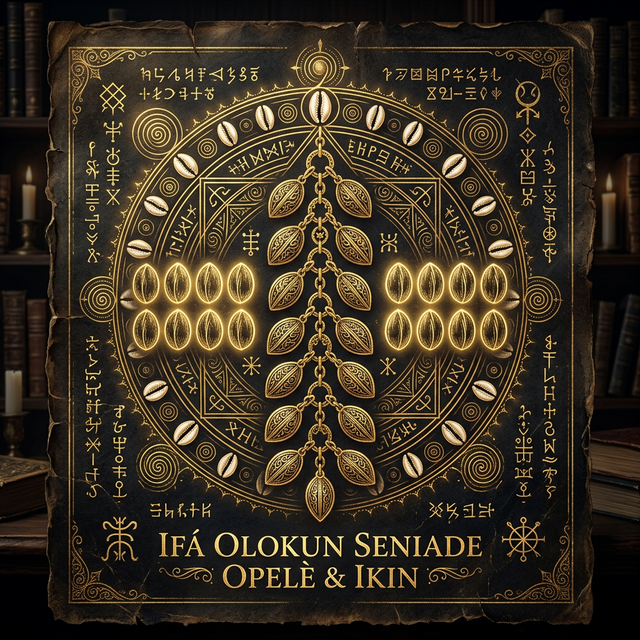
The corpus is organized into 256 Odù — chapters that arose from the combination of 16 principal signs (Mẹjì) and 240 derivative signs. Each Odù contains hundreds of sacred verses (Ẹsẹ Ifá) carrying stories, prescriptions, proverbs, and moral instruction. A Babaláwo selects and interprets these verses through the cast of the Opèlè chain or palm nuts (Ikin).
Living Tradition
Recognized by UNESCO in 2005 as an Intangible Cultural Heritage of Humanity, Ifá is not a relic — it remains a living, practiced tradition across West Africa and the African diaspora. In Cuba it survives as Lucumí (Santería); in Brazil as Candomblé; in Trinidad and Haiti in related forms. Millions consult Babaláwo for guidance on health, relationships, vocation, and spiritual alignment.
Topics
Related Terms
Babaláwo
Roles & Practice
A priest of Ifá; literally 'father of secrets.' A Babaláwo is a trained diviner who has undergone years of initiation and study to master the 256 Odù and the art of Ifá divination.
→Odù
Core Concepts
One of the 256 chapters of the Ifá literary corpus, each representing a specific configuration of the divination system and containing hundreds of sacred verses, stories, prescriptions, and proverbs.
→Ọ̀rúnmìlà
Deities & Spirits
The Yorùbá deity of wisdom, knowledge, and foresight; the divine custodian of Ifá. Ọ̀rúnmìlà is said to have been present at creation, witnessing the destiny assigned to every being, and serves as the principal intermediary between humanity and the divine order.
→Yorùbá Version Available
Ifá
Ẹ̀kọ́ àti ètò àwádìí tí ó jẹ́ ìpìlẹ̀ ìmọ̀ àti ẹ̀mí ìṣan àṣà Yorùbá. Níbẹ̀ ni a ti ń rí àwọn ewì mímọ́, ìtàn ìní, àwọn òwe, àti ẹ̀kọ́ ìwà tí àwọn Babaláwo ń gbé karí.